Layered lighting: how ambient, task and accent light work together
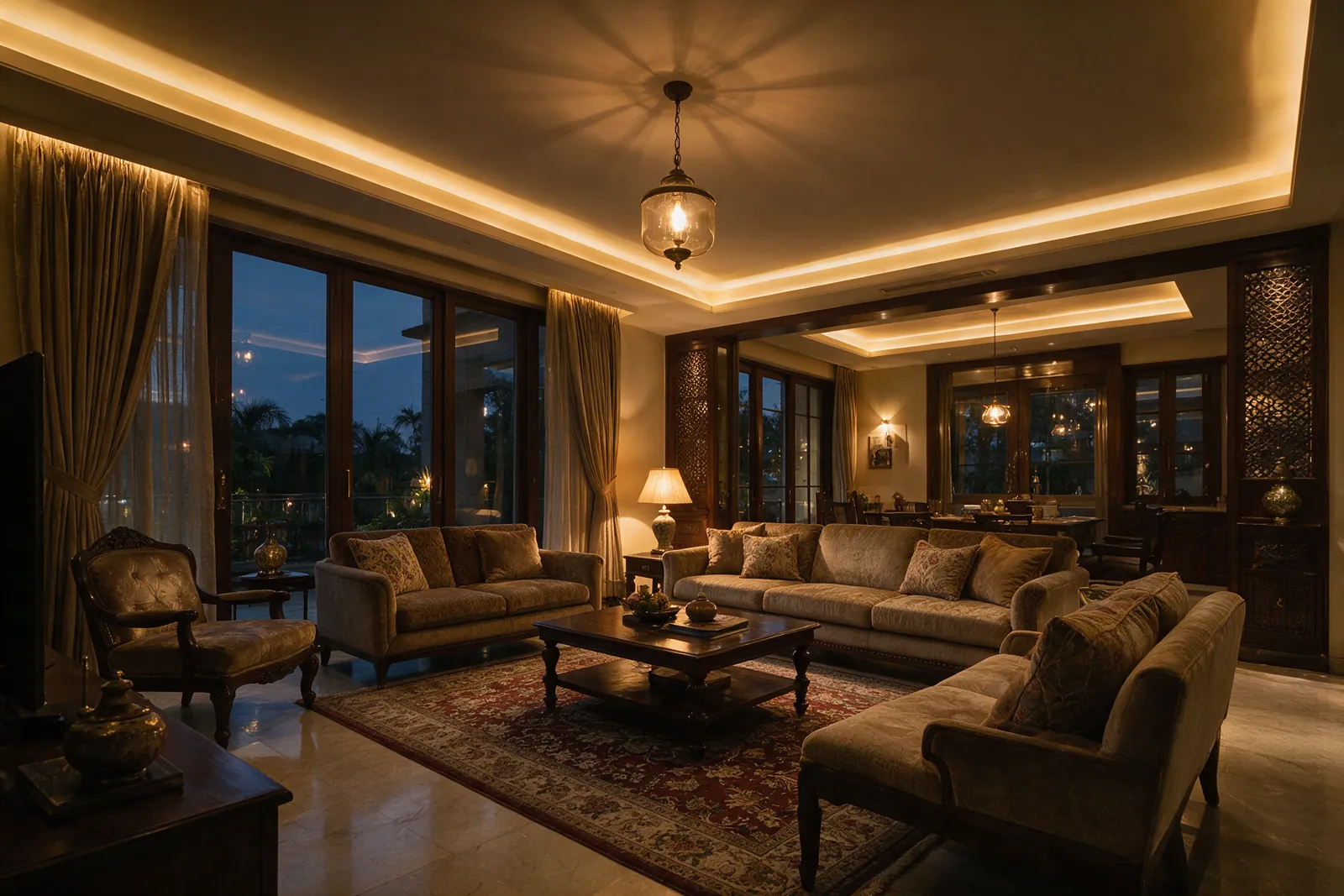
Walk through a well-designed home in the evening and notice what is missing: harsh glare, dark corners and a single bright ceiling light doing all the work. Good lighting is built in layers, each with a different job. It is also the part of a project that is hardest to change once the ceiling is closed.
Three layers, three jobs
- Ambient light is the general glow that lets you move around comfortably. It comes from cove lights, ceiling fixtures and indirect sources.
- Task light is focused light for doing something: chopping vegetables, reading, applying make-up, working at a desk.
- Accent light draws the eye to something you want noticed, such as an artwork, a textured wall, a niche or a plant.
A room that has only ambient light feels flat. A room with all three can change character through the day, from bright and practical to soft and calm.
Room by room
| Room | Ambient | Task | Accent |
|---|---|---|---|
| Living room | Cove lighting, a few well-placed downlights | Reading lamp beside the main seat | Wall washers, display niches, a feature wall |
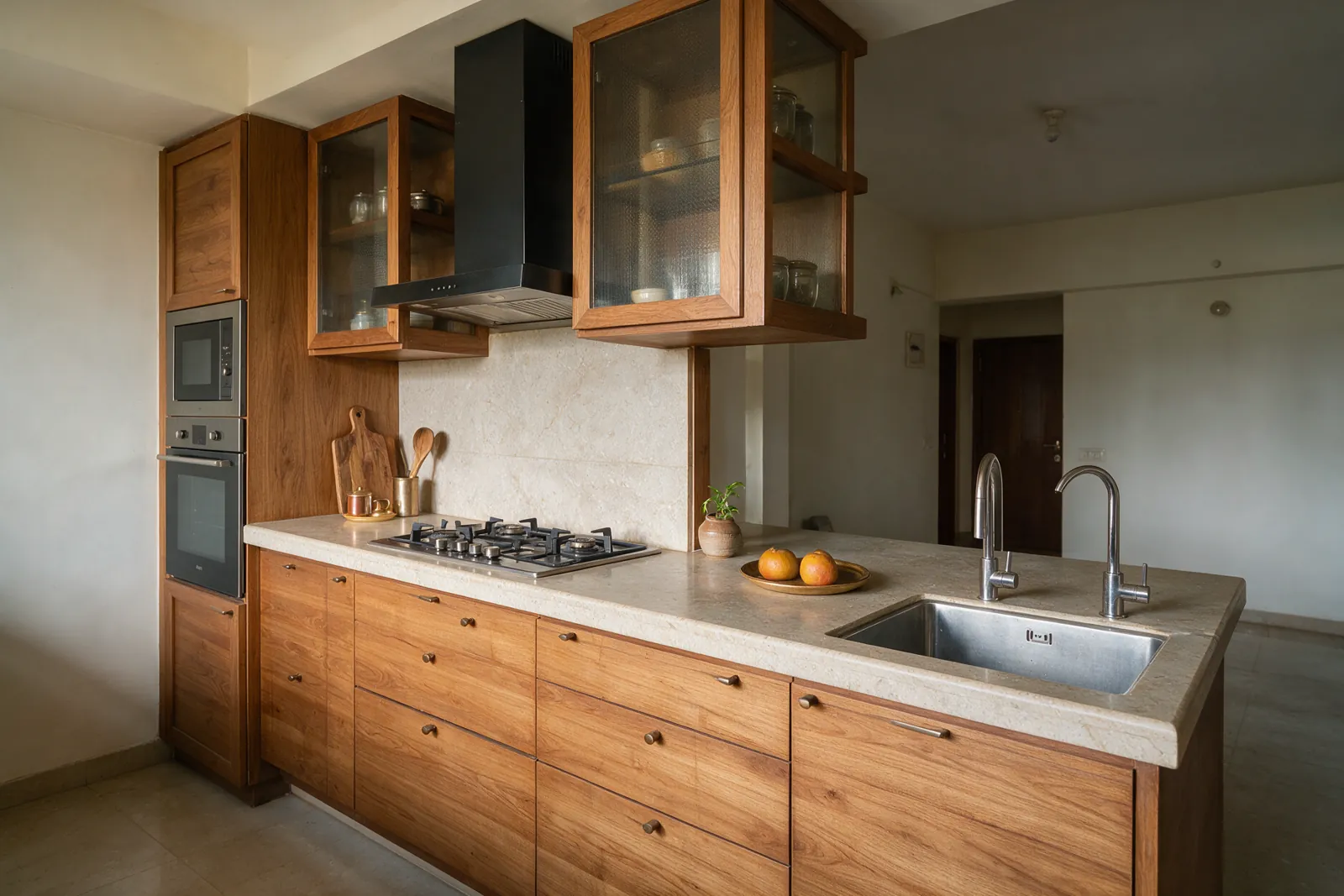
| Kitchen | Even ceiling light | Under-cabinet strip over the counter | Light inside glass-front cabinets |
| Bedroom | Soft cove or a central fixture on a dimmer | Bedside lamps for reading | Headboard backlight or a wardrobe profile light |
| Dining | Ceiling glow | A pendant that lights the table without glare | A lit crockery unit or a plant |
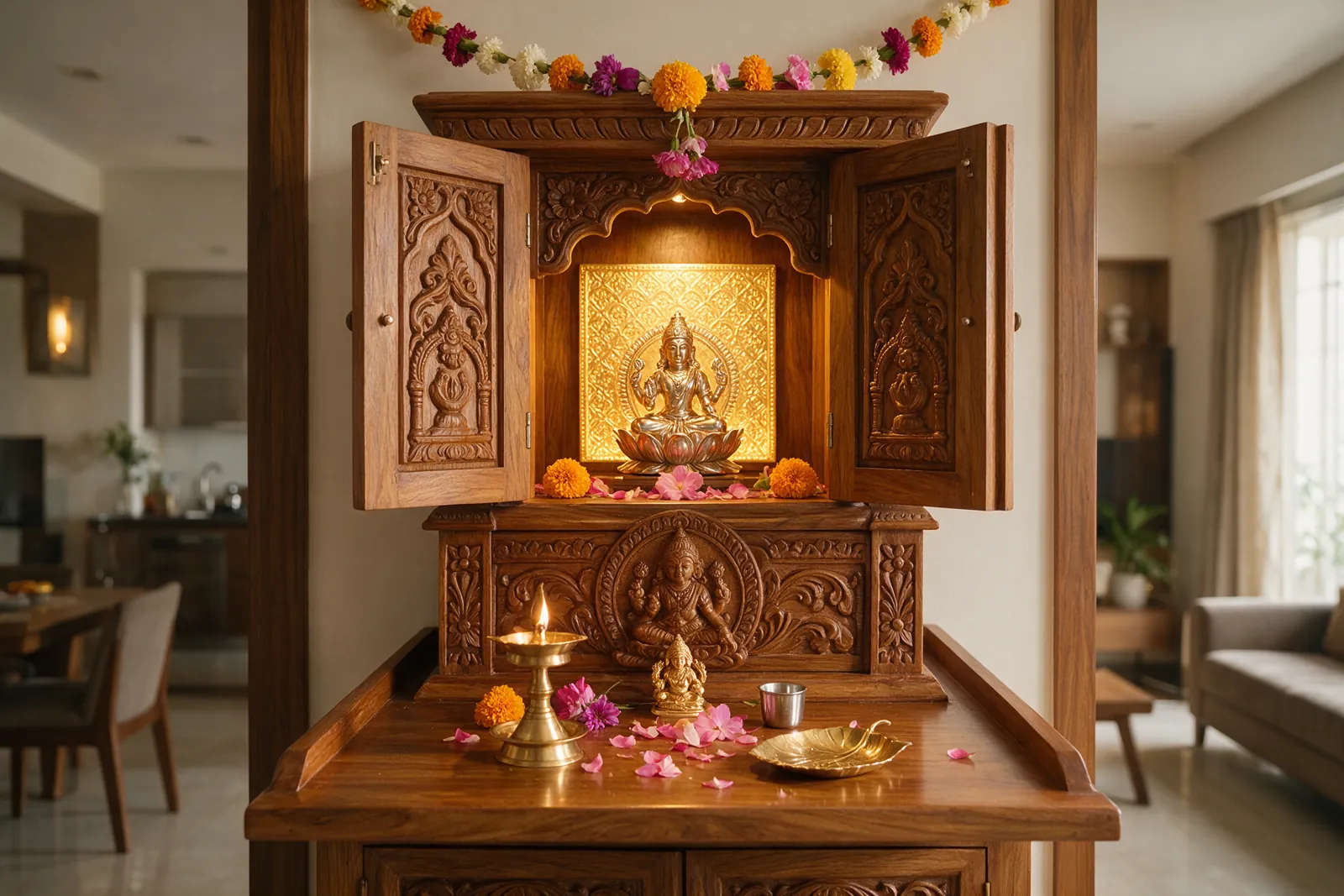
| Pooja unit | Gentle surrounding light | A soft downlight on the unit | A warm glow behind the shrine |
Warm or cool white
Colour temperature is measured in kelvin. Lower numbers are warmer and more yellow, and higher numbers are cooler and bluer.
- 2700K to 3000K is warm white. It suits living rooms, bedrooms and dining areas.
- 3500K to 4000K is neutral. It suits kitchens, work areas and study tables.
- Cooler than that can feel clinical in a home and is best kept to places where accurate colour or sharp visibility matters.
Mixing temperatures in the same room, without intent, looks untidy. Choose one family per space and keep the colour rendering high, so that wood, fabric and food look natural.
Plan it before the ceiling is built
Lighting is easy to talk about and hard to retrofit. Cove channels, electrical points, driver locations and switch positions are all decided before the false ceiling and the wall finishes. A designer working from a lighting plan will mark each of these on the drawings.
- Put layers on separate switches, or on dimmers, so you can control the mood.
- Avoid a grid of identical downlights. Place them where they have a purpose.
- Keep fixtures out of your direct line of sight where you sit or lie down, to reduce glare.
- Plan for a quiet, hidden driver location that can be serviced later.
Lighting looks different in a photograph than in a room. Before the ceiling plan is frozen, visit a finished space and judge brightness, warmth and glare yourself. Our Experience Center shows several lighting approaches in finished rooms.
Frequently asked questions
Should I choose warm or cool white lights for my home?
Most homes feel best in warm white for living areas and bedrooms, and neutral white in the kitchen and at work surfaces. The important thing is to be consistent within a room.
How many downlights does a room need?
There is no fixed number. It depends on the ceiling height, the room size and the other layers of light. A designer plans the count from a lighting layout, rather than filling the ceiling with a grid.
Are smart or dimmable lights worth it?
Dimming is worth planning for in living rooms and bedrooms, because it lets one room serve several moods. Smart controls add convenience, but only if the wiring and driver compatibility are planned from the start.
Do cove lights use a lot of electricity?
Modern LED cove lighting uses relatively little power. Total consumption depends on the wattage, the hours of use and whether the lights are dimmed.