Plywood grades explained: MR, BWR and BWP for Indian homes
Walk into any plywood showroom and you will hear three abbreviations: MR, BWR and BWP. They sound technical, and they are often used as a sales shortcut. In plain terms, they describe one thing: how well the adhesive between the layers resists moisture.
What the grade tells you
Plywood is thin layers of wood veneer glued together with their grains crossed. The grade is about the glue line, not the species of wood or the finish on the surface. A board with a more water-resistant glue line will hold together better when it meets humidity, spills or leaks. It does not mean the board is waterproof forever, and it does not mean it is stronger in every way.
The three common grades
| Grade | What it means | Where it suits | Think twice |
|---|---|---|---|
| MR (moisture resistant) | Handles normal indoor humidity, but is not meant for repeated wetting | Wardrobes, bed storage, TV units and shelving in dry rooms | Under a sink, near a bathroom wall, or anywhere water can reach |
| BWR (boiling water resistant) | A stronger glue line that resists water and humidity better than MR | Kitchen cabinets, vanities and furniture in humid zones | Continuous standing water or direct exposure to the weather |
| BWP (boiling waterproof) | The most water-resistant grade, often described as marine or waterproof | Sink bases, bathroom units, balconies and wet utility areas | Using it everywhere by default, which adds cost without benefit in dry rooms |
Choose by room, not by habit
The grade that matters changes through the house. A wardrobe in a dry bedroom does not need the same board as the cabinet under the kitchen sink. Paying for the highest grade everywhere can be wasted money, while using the lowest grade near water is a mistake you will see within a few monsoons.
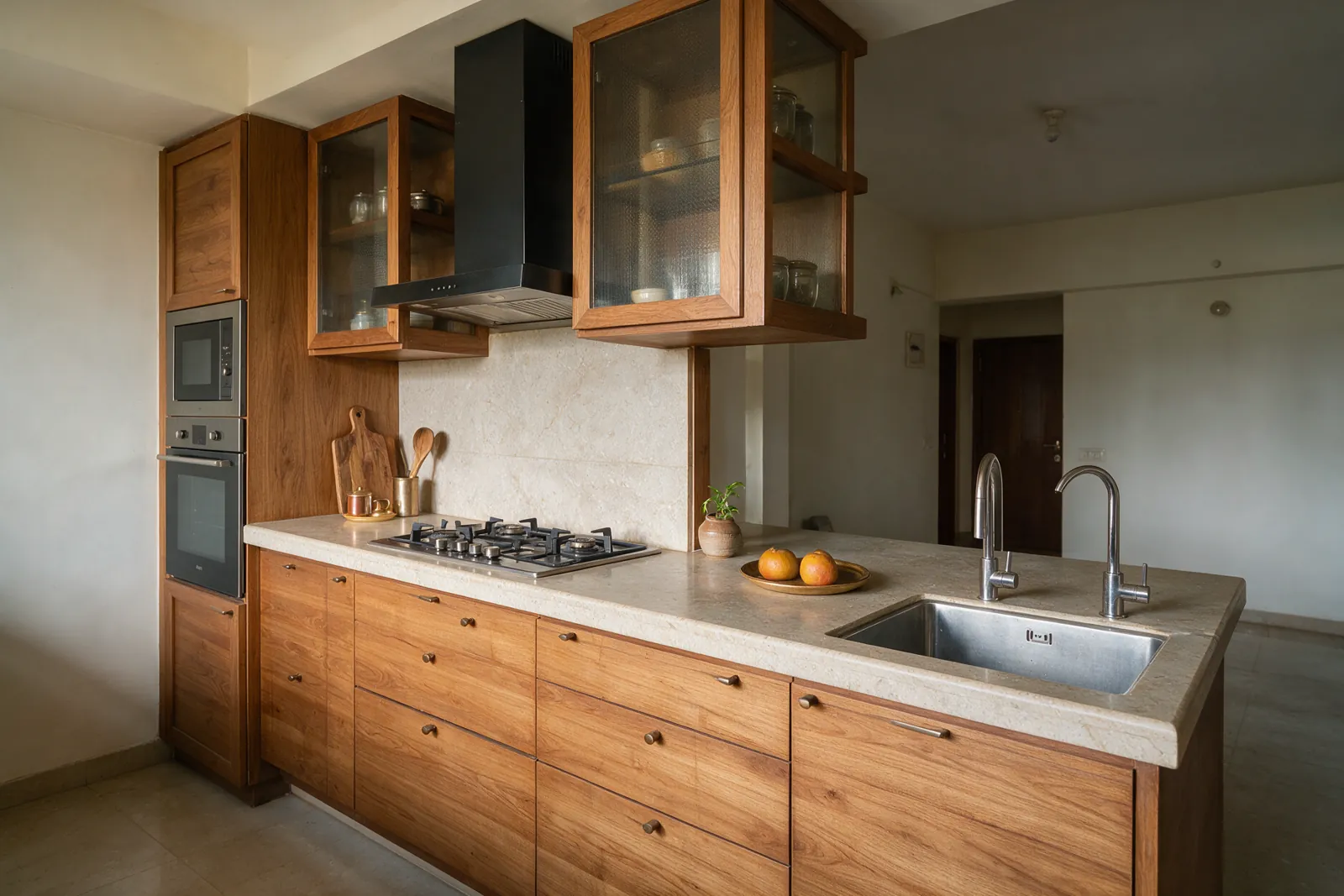
- Kitchen sink base and bathroom vanity: choose a water-resistant grade, and seal every cut edge.
- Other kitchen cabinets: a good BWR board is a common and sensible choice.
- Bedroom wardrobes, TV units, study tables: MR can be suitable in dry rooms. A higher grade gives extra margin in humid or ground-floor homes.
- Balcony and utility: use waterproof boards and finishes designed for the exposure.
Other boards you will hear about
Plywood is not the only option. MDF, particle board and high-density boards are used widely in modular furniture, especially where surfaces are laminated. They can be a good choice in the right place, particularly for flat panels in dry rooms. Their weak point is moisture at cut edges and screw points, so edge sealing and correct use matter. A good provider will tell you where each board is used and why.
How to check what you are buying
- Ask for the brand and grade in writing, and ask for it to be named on the quotation.
- Look for the manufacturer's marking on the sheet, and buy through an authorised channel.
- Check thickness. A sheet that feels light or arrives thinner than stated is a warning sign.
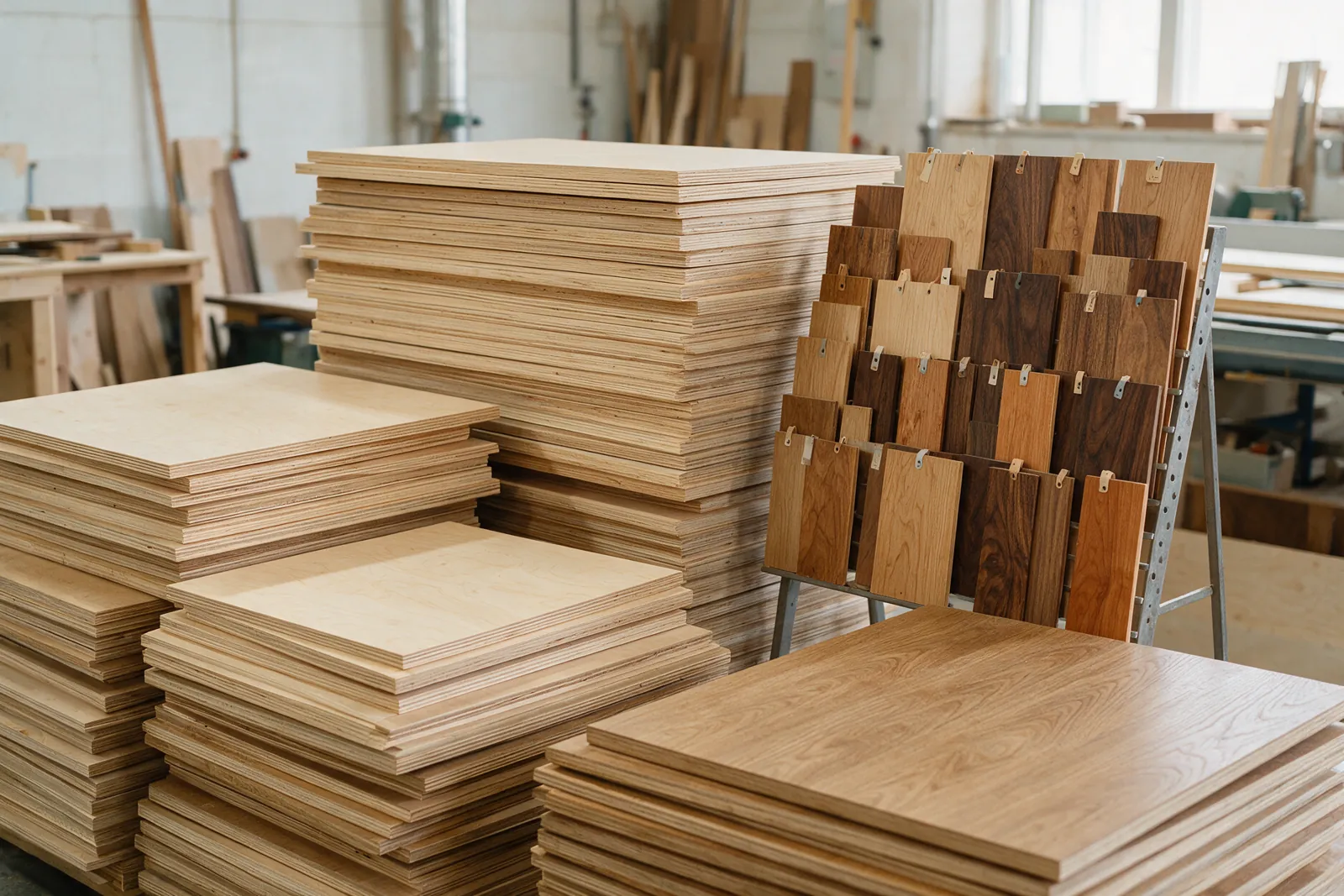
- Look at the edge. Even layers with no gaps or voids suggest better construction.
- Ask how cut edges are sealed. Raw edges are where moisture enters.
Get the brand and grade written on the quotation, and ask how cut edges are sealed. Woodwork for Nuvora homes is made in our own facility under rigorous quality standards, so the board, the edge finishing and the hardware are decided together rather than assembled from whatever arrives on site.
Frequently asked questions
Is BWP always better than BWR?
BWP resists water best, but "better" depends on the place. In a wet area it is the right choice. In a dry bedroom it adds cost without a practical benefit. Match the grade to the exposure.
Is MDF a bad choice for kitchens?
Not automatically. Properly sealed and laminated MDF-based boards can work in dry parts of a kitchen. They are a poor choice where water can reach, such as under the sink, because swelling at the edges is hard to repair.
How do I know the plywood I am paying for is genuine?
Ask for the brand and grade on the quotation, check the manufacturer marking on the sheets, and buy through an authorised channel. A provider with its own manufacturing can also show you the material as it comes into production.
Does a thicker board mean better quality?
Not on its own. Thickness is chosen for the job: heavier loads need thicker boards, while back panels can be thinner. Quality comes from the glue line, the veneers and how the board is finished and used.