Vastu-friendly interiors: practical guidance without compromising design
For many families, a home should feel right in more than one way. Vastu Shastra is a traditional system of guidance on how spaces are arranged, and plenty of homeowners in Bengaluru ask their designers to respect it. It is a matter of belief and tradition rather than something we can measure, and it is entirely your choice. If it matters to you, here is how it can sit alongside good design.
Start with what you can change
In a new apartment, the building, the entrance and the position of the rooms are already fixed. You cannot rotate the flat. What you can usually change is the placement of the pooja unit, the direction you face while cooking, the position of beds and sofas, and the colours and materials in each room. Most practical Vastu planning in an apartment lives in those choices.
Common guidance, and practical options
| Space | What traditional guidance commonly suggests | A practical approach in a flat |
|---|---|---|
| Entrance | A clear, well-lit and uncluttered main door | Keep the entry bright, with a tidy shoe unit and a simple console |
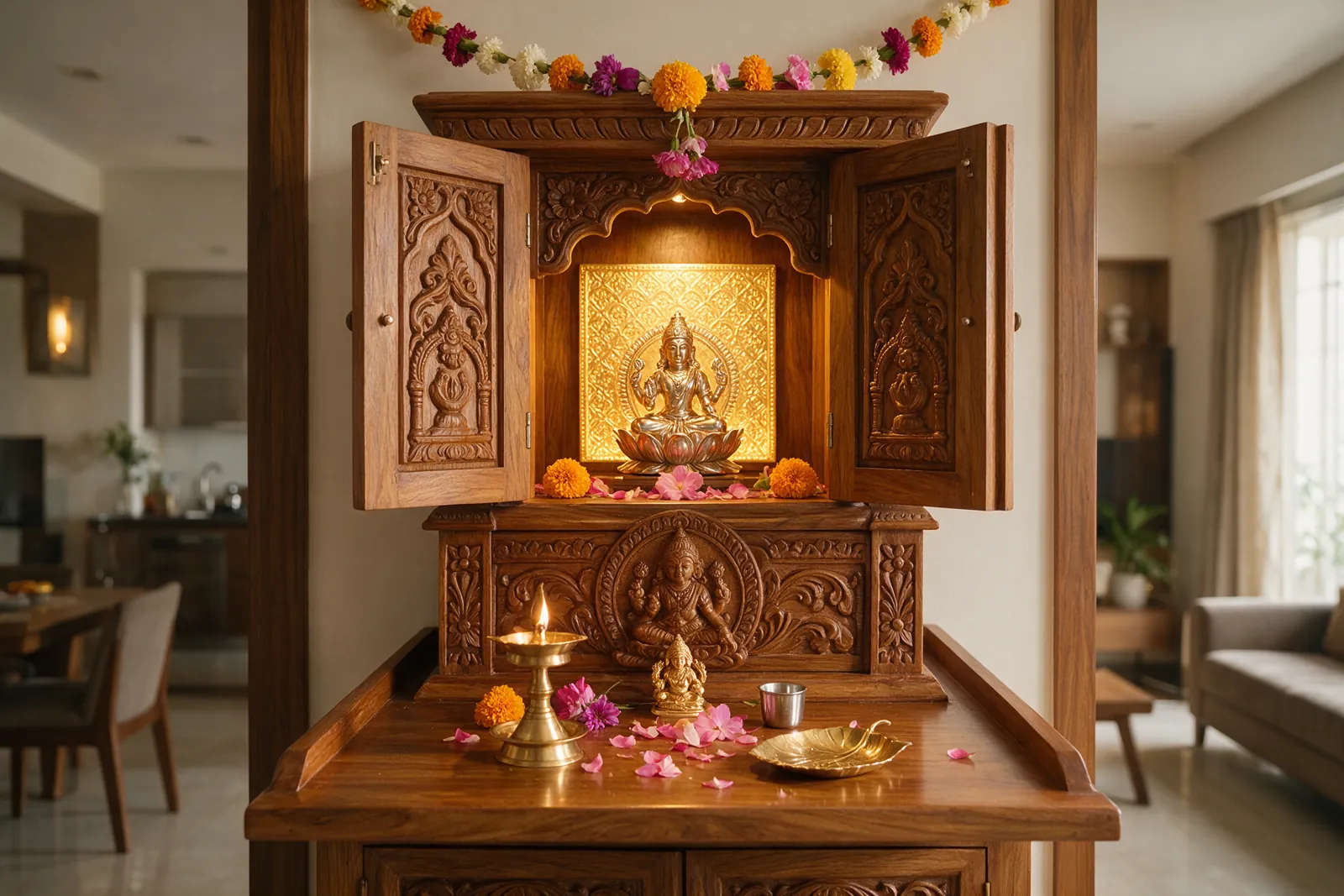
| Pooja unit | The north-east corner of the home or the east wall, facing east or north | Choose the best available wall in that direction, away from bathroom walls |
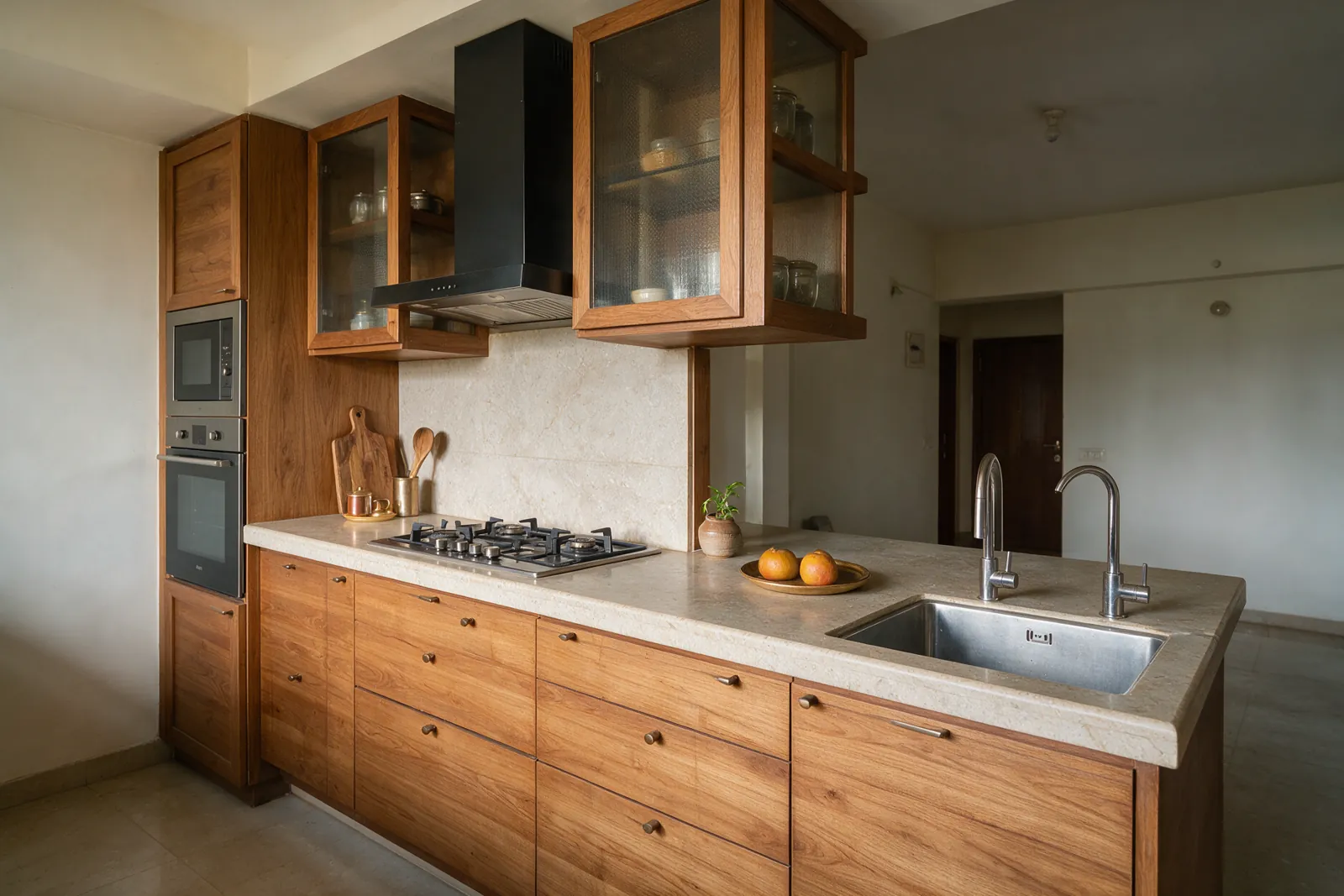
| Kitchen | The south-east corner, with the cook facing east | If the kitchen is fixed, adjust the hob position so that the cook faces east where possible |
| Master bedroom | The south-west of the home, with the head of the bed towards south or east | Orient the bed to the preferred direction and keep heavy storage on the south or west wall |
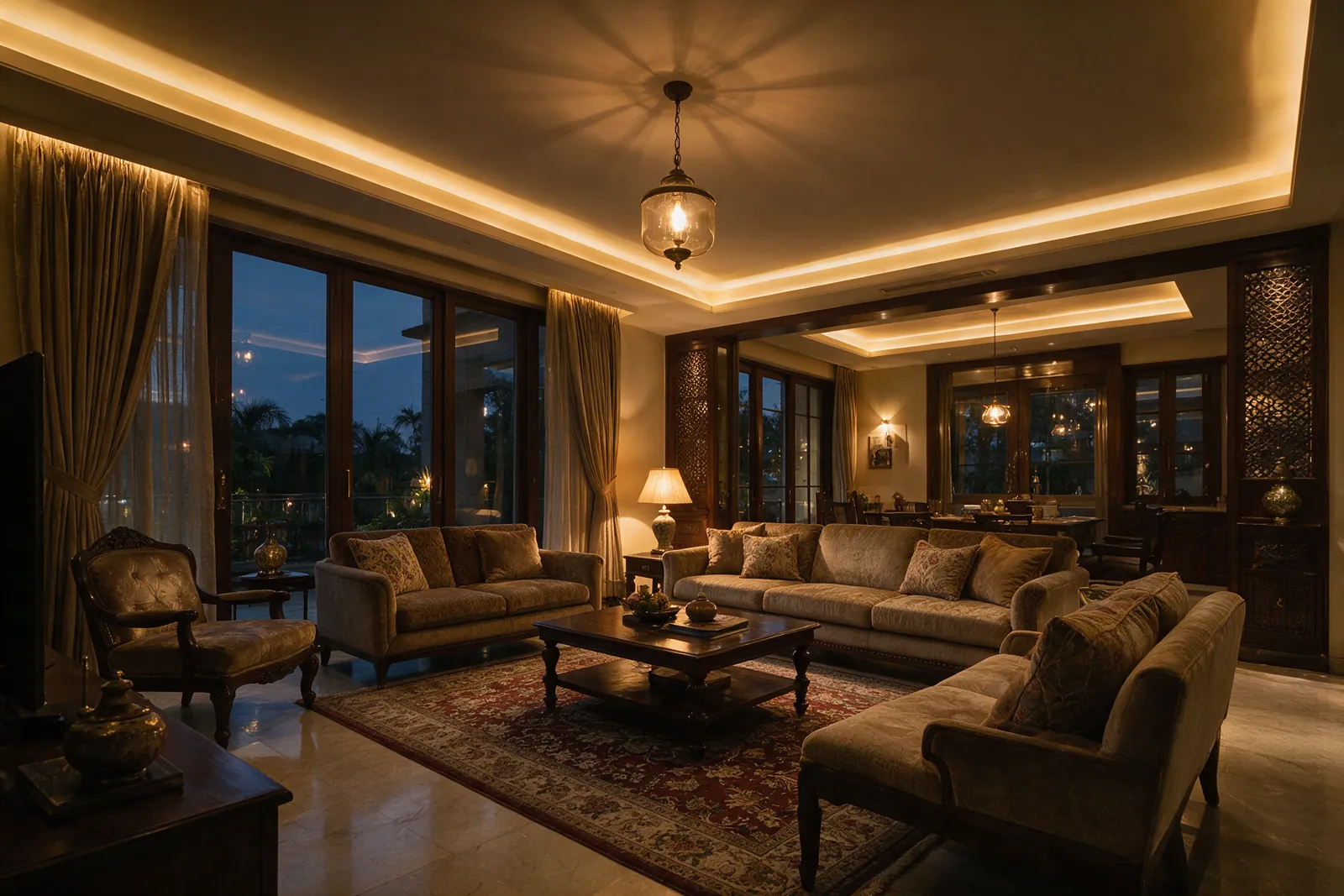
| Living room | The north, east or north-east, kept open and light | Keep seating arranged so that the main seat faces north or east |
| Toilets | Not in the north-east | Where the position is fixed, keep the door closed and the space well ventilated |
Design without clutter
Many of the ideas associated with Vastu overlap with sound planning: good light, fresh air, tidy surroundings and clear walking paths. A well-designed home tends to support these anyway. Closed storage, a clean entry, plenty of daylight and a calm colour palette make a home feel settled whether or not you follow Vastu.
Colours and materials
Traditional guidance links directions with colours, but in practice, most families choose a palette they enjoy and keep warm, natural tones in the pooja and living areas. Natural wood, stone and fabric all suit this approach. It helps to agree your preferences with the designer at the start, so the layout and finishes are planned together.
Where to compromise
Vastu preferences can conflict with the structure of an apartment, or with each other. For example, the best direction for a wardrobe and for a window may not agree. A designer's job is to help you weigh the options, not to promise a perfect result. If strict adherence matters to your family, consider consulting a Vastu practitioner before the layout is frozen.
If Vastu is part of your brief, say so in your first meeting, before the layout is frozen. A layout that respects your preferences from the beginning is far easier to achieve than one adjusted after production.
Frequently asked questions
Is following Vastu necessary for a good interior?
No. Vastu is a traditional belief system, and a home can be well designed without it. If it matters to your family, your designer can plan around it where the building allows.
Can interior design fix a Vastu problem in my flat?
Interior design cannot change a building's structure. It can adjust furniture placement, bed and cooking orientation, the position of the pooja unit and the colour palette. Whether those changes matter is a personal belief, and we respect your choice either way.
Where should the pooja unit go?
Common guidance prefers the north-east or the east wall, away from bathroom walls and the space under staircases. Your designer can suggest the best option based on the actual layout of your home.
Should I speak to a Vastu consultant as well?
If strict adherence is important to your family, it is sensible to consult a practitioner early, ideally before the layout is frozen. Your designer can then work from their recommendations.